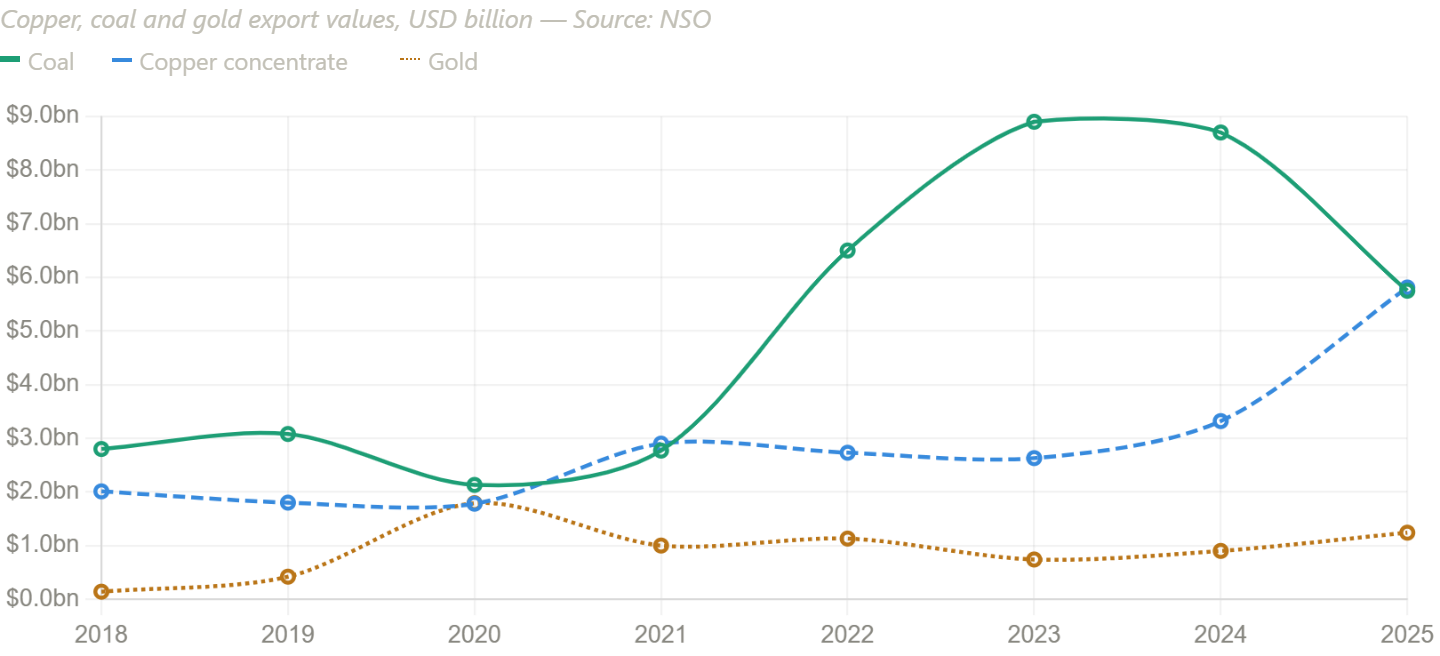
In 2025, copper concentrate exports from Mongolia reached approximately US$5.8 billion. That was over three times the value six years before. Mongolian minerals production is picking up, and the data shows.
The Mongolia that international investors are flocking to today is meaningfully different from the one that generated cautionary tales of the 2010s. GDP reached US$25.1 billion in 2025. It grew at 5.5%, a rate the IMF projects to hold through at least 2028. Its multi-year track record has told a similar story. Mongolia posted 5% growth in 2022, 7.4% in 2023, and 5.1% in 2024. The pandemic contraction of 2020 now reads as an interruption rather than a reversal. 2017 reform commitments have held.
The bond markets registered this shift earlier than most. Mongolia carries over US$2.6 billion in sovereign bonds outstanding, spanning maturities from 2026 through 2031. The 2028 and 2029 instruments trade above par. The curve still reflects an appropriate premium for frontier risk, but it has compressed considerably. Z-spreads on mid-curve bonds sit in the 160 to 220 basis point range, elevated relative to investment-grade peers. For fixed-income investors, Mongolia is a story about the right price.
The transformation goes beyond copper. Coal exports surged to nearly US$8.7 billion in 2024, as rail infrastructure improvements dramatically increased throughput to China. Key corridors connecting Tavan Tolgoi to Gashuunsukhait and Zuunbayan to Khangi addressed what was long the credible structural critique of investment: that Mongolia had the resources but lacked the routes to market. In 2025, gold generated over US$1.2 billion in export value, establishing itself meaningfully alongside coal and copper.
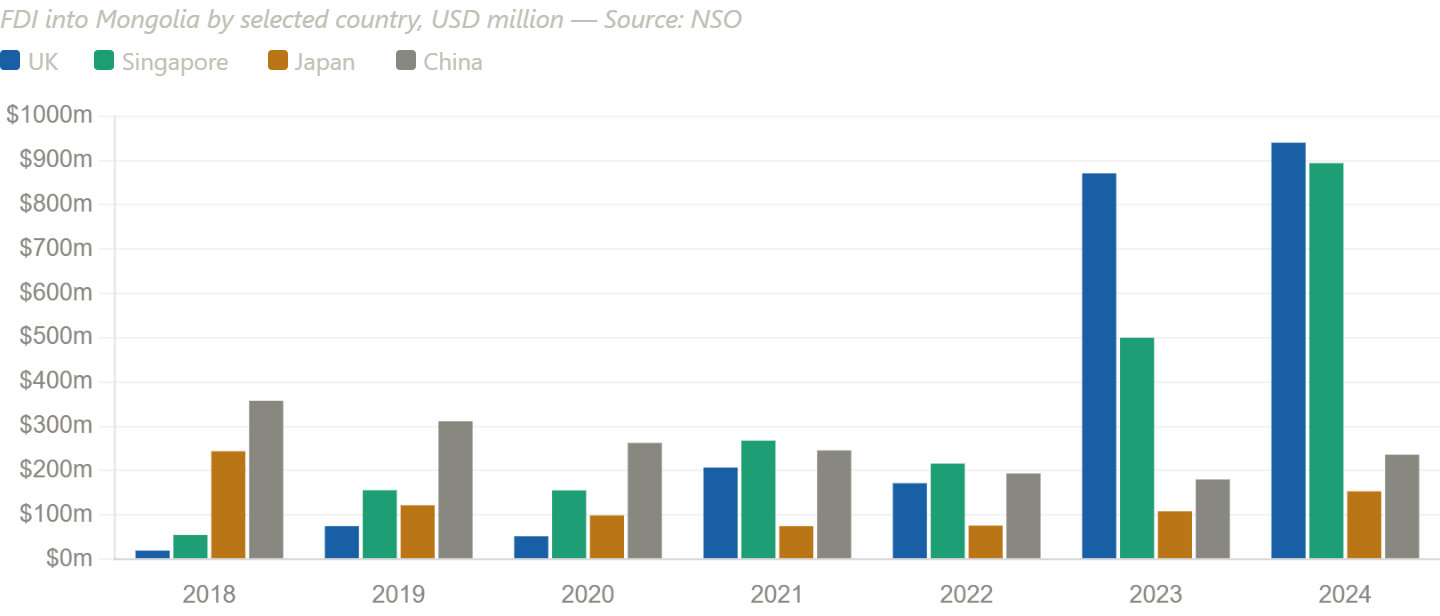
Foreign direct investment also demonstrates improving perceptions. UK investment in Mongolia grew from US$19 million in 2018 to US$940 million in 2024. Singapore moved from US$55 million to US$894 million over the same period. Japanese investment reached US$153 million in 2024, consistent and growing. They reflect reappraising Mongolia's position. This has come in part from the supply-chain diversification logic that elevated frontier markets broadly in the years since the pandemic.
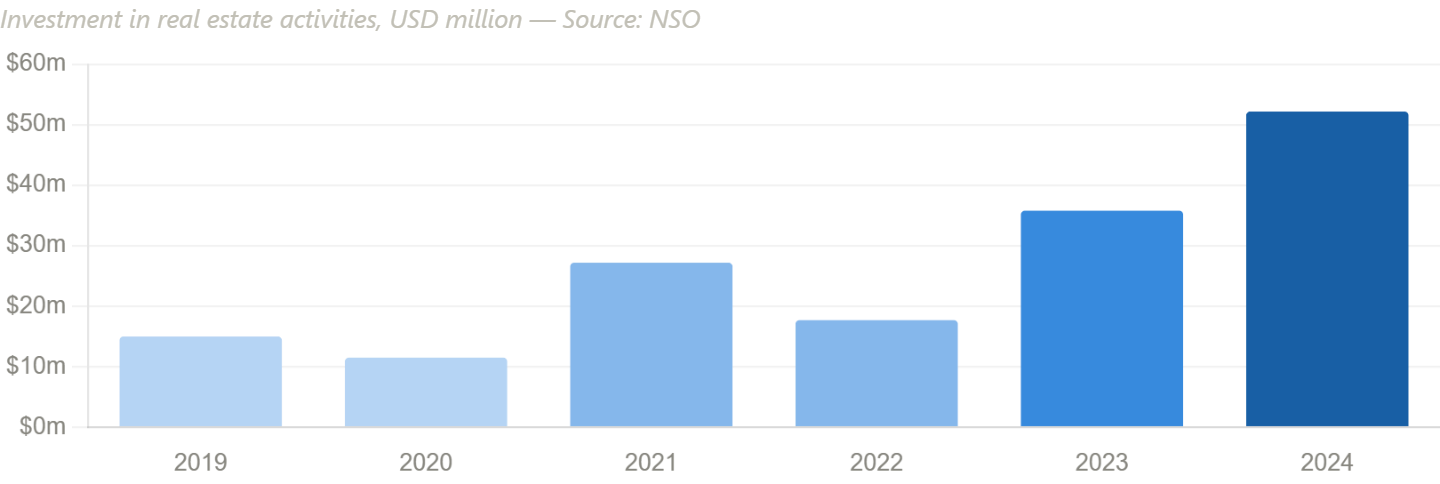
The Ulaanbaatar real estate market is particularly telling. Investment in real estate activities rose from US$17.7 million in 2022 to US$52.2 million in 2024, nearly tripling in two years. Gross rental yields average close to 11%, a figure that would long since have been arbitraged away in Seoul, Singapore or Tokyo. Price-to-rent ratios in the city centre sit around 12, against a regional norm of 20 to 40. This combination of elevated yields and compressed price-to-rent multiples describes a locally-driven, under-institutionalised market. Capital pools that would typically normalise these differentials have not yet taken notice.
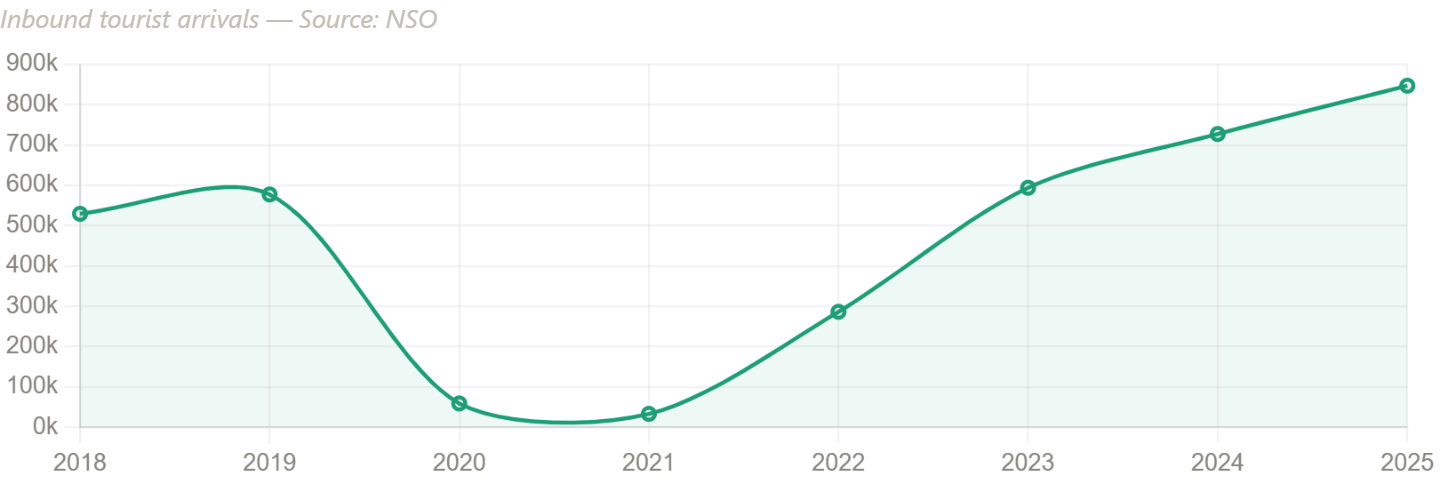
Tourism data reinforces the diversification argument. Visitor numbers reached nearly 950,000 in 2025, already approaching the government's target of one million. Arrivals more than tripled between 2022 and 2025. The sector still operates well below its potential relative to Mongolia's land area and natural assets, which means the upside from continued infrastructure investment and visa liberalisation is genuine.
The risk-reward calculation had changed. Investors who will benefit most from Mongolia's continuing rehabilitation are those willing to make a distinction between risk that is structural and risk that is overstated, and to act before the consensus catches up. On several metrics that matter most, that window is narrowing.